


Preserve habitat Background to the initiative
Experience nature consciously is an initiative in Kleinwalsertal with the aim of giving more weight and attention to the value of nature for people. To this end, it focuses on two main areas: guiding recreationists and leisure sports enthusiasts and raising awareness and imparting knowledge.
Because nature is so much more than just the backdrop for unforgettable mountain experiences. It is a habitat for animals and plants. It provides drinking water and supplies us with high-quality food. Not only does it provide valuable raw materials such as wood, but it also protects against avalanches and mudslides and regulates the climate.
Information and tips for you Discover consciously experiencing nature


Everyone can help! How you can make a contribution
One thing is certain, together we can achieve more. With a little consideration and a few tips, your next time out hiking or biking, skiing or snowshoeing will leave smaller traces behind.
- Respectful in nature: stay on marked paths and routes, avoid twilight and night times, take your garbage with you, find out about tips on nature toilets and what applies to your four-legged friend.
- Be aware of each other: show consideration for others and appreciate the interplay between the cultural and natural landscape.
- Experience with foresight: Plan your tours carefully and conscientiously.
In harmony with nature Tour tips in summer


Everything you need to know Important information for tour planning

To be remembered Unforgettable experiences around nature


You never stop learning! Did you already know?
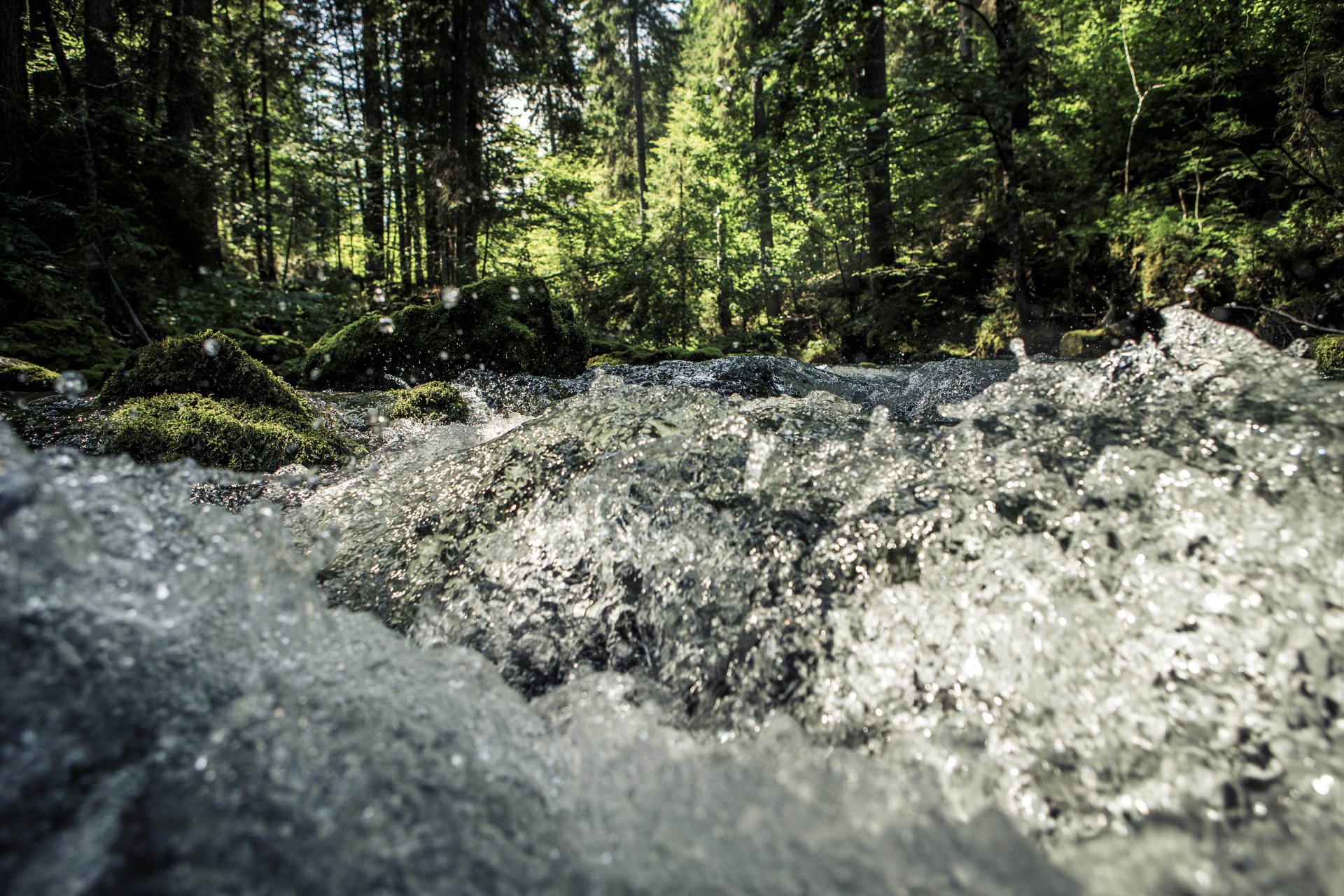
Water from the Walser region flows into the Black Sea
A watershed is the boundary between different river basins. Simply put, it determines the direction in which rivers, streams, and small rivulets flow and which larger river system their water ultimately flows into.
The European watershed separates the tributaries flowing into the Atlantic Ocean from those flowing into the Mediterranean Sea and the Black Sea. It stretches from Gibraltar to Russia, cutting across Europe. Part of this line also runs along the Kleinwalsertal: over the Höferspitze and the ridge to the Güntlispitze, continuing over the Grünhorn and the Gerachsattel. The summit of the Ifen also lies on the boundary between the Rhine and Danube watersheds.
Most of Vorarlberg’s waterways flow into the Rhine and from there onward toward the North Sea or the Atlantic Ocean. The water from the Kleinwalsertal, however, takes a different path: via the Breitach, it flows into the Danube and ultimately reaches the distant Black Sea. The headwaters of the Lech near Lake Formarin also drain through the Lech Valley into the Danube.
The idea that water from our valley travels such a long distance eastward, while most of the water in the rest of Vorarlberg flows in the opposite direction, is quite astonishing. We learn early on that the Rhine flows into the North Sea and the Danube into the Black Sea. What we’re less aware of is that both are fed along their course by countless small waterways, including streams like ours in the
Moles: Tunnel-diggers with Amazing Abilities
Some gardeners may find the mounds of dirt on their lawns annoying, but if you look more closely beneath the surface at these little gluttons, you’ll discover some useful benefits.
Moles plow through our soil as they build their tunnels, providing excellent aeration. Thanks to the high hemoglobin content in their blood, they can survive for long periods underground with very little oxygen. In their extensive tunnel systems, these industrious diggers are constantly on the hunt for food, consuming their own body weight in earthworms, insects, and larvae every day. They never touch roots or other plant matter; instead, they help keep the pests that damage them at bay.
These fluffy animals have adapted perfectly to life underground. They can seal their nose and mouth with skin folds while digging, and their ears and eyes are deeply recessed in their fur so that no soil or sand can get in. Although nearly blind, their excellent senses of touch and hearing allow them to detect any prey entering their tunnel system, which can stretch up to 2 km. Using their hairless fur, they move forward and backward through the earth, and their powerful digging paws keep at work year-round, since moles do not hibernate. To get through the cold season, they dig even deeper and create storage chambers filled with earthworms, biting off the front part of the worms to keep them alive and thus preserved.
Unfortunately, dead moles are currently being found along the side of the road because they can't find enough food in the dry soil and are simply starving to death.
Magpies – Thieving Cawers or Clever Parents?
Every child is familiar with these black-and-white, noisy birds from the corvid family. Their reputation as thieves who love to steal shiny objects is also widely known. Yet the magpie is a fascinating and, above all, intelligent bird that we humans encounter frequently as a synanthropic species.
Magpie pairs often stay together for life and are quite affectionate with one another, though they will vociferously defend their brood with everything they have, even against larger rivals. They like to build their nests artfully—and even with a roof—in tall trees. These nests are often used for many years, unless they serve as a nesting site for other bird species, such as the long-eared owl. Since they occasionally use a piece of wire or similar material for nest-building, one might think that magpies are attracted to shiny objects; however, research has shown this to be a myth.
The rumor that smaller songbirds are declining due to magpie egg predation has also not been confirmed. While it is true that magpies occasionally eat the occasional bird egg in addition to insects, larvae, and seeds, this does not occur on a significant scale and has no impact on species populations.
These slender birds with their metallic-sheen plumage and long tails are thus better than their reputation and so intelligent that they can even recognize themselves in a mirror.
Aerial acrobats above your roof - the red kite
If you’re wondering which large bird just cast a shadow over the hillside as it flew by, you’ve probably spotted a red kite overhead. These elegant aerial acrobats are easy to spot this time of year as they soar over the sun-warmed slopes and our villages.
Red kites are the largest birds of prey in our region after the bearded vulture and the golden eagle—easily recognizable by their reddish-brown base coloration and darker wing feathers with large light spots on the so-called primary feathers. Most distinctive, however, is their forked tail, which they use to control their flight maneuvers. Thanks to this and their size—their wingspan can reach up to 1.95 meters—they are easily distinguished from the smaller black kite.
Their preferred prey includes small mammals, amphibians, and even birds, which they can capture with acrobatic maneuvers in flight. But insects, carrion, or occasionally a young hare are also on the menu of these dietary all-rounders. They are agile hunters and belong to one of the few bird species found almost exclusively on the European continent.
If you want to spot a red kite, scan the sky on sunny days over meadows, pastures, open woodlands, and forest edges. You can also spot it from your balcony or garden as it perches on tall, older trees or glides over villages.
Fur is back in style - but only for the bumblebee
Astronomical spring begins this weekend, marked by the first equinox of the year. Daylight hours will once again outlast the night, and temperatures will rise noticeably. This is typically when the first insects appear—especially bumblebees. Around 25 species of these seemingly laid-back buzzers can be spotted here in the Kleinwalsertal.
They belong to the wild bee family and are true specialists when it comes to flying at higher altitudes and in low temperatures. Thanks to their fur and their special ability to shiver, these insects can keep themselves and their offspring warm even in cold temperatures—unlike most other insects. If it gets too warm in the summer, however, they can even cool their bodies down while flying.
Bumblebees play a crucial role in pollination and are thus responsible for the survival of many flowering plants. They particularly enjoy accessing pussy willows in the spring, which is why these should not be picked. A lot of pollen gets caught in their fur and their “pollen pants,” and their hard work early in the year ensures a steady supply of flowers even high up on our alpine meadows. Since the different species visit different flowers due to their varying proboscis lengths, even the most remote niches are covered by bumblebees.
A bumblebee colony lives for one summer, and only the queens hibernate, often in old mouse holes and burrows.
The widespread rumor that bumblebees cannot sting persists. However, they are rarely aggressive and use their sting only as a last resort.


